






The war in Iran has weakened the UAE economy from the inside. From stock markets to gold trade, from aviation to real estate, this is a complete picture of one of the worst economic crises in decades.
The war in Iran is affecting the UAE economy even though it is thousands of miles away. Dubai’s tall buildings, Abu Dhabi’s financial centers, and the busy flights across the Al-Khaleej are all paying the price of a war that is not happening on their land.
On February 28, 2026, the United States and Israel started a joint military operation against Iran. This not only shook the political situation in the Middle East but also gave a major shock to the UAE economy. Finance, aviation, tourism and real estate have all been directly affected.
The UAE built its economy by connecting with the world, but now those same global connections have become its biggest weakness.
UAE Stock Market Lost $120 Billion
After the war began, UAE stock markets saw a shocking decline.
Dubai Financial Market index dropped about 16 percent, and around $45 billion was lost. Abu Dhabi’s ADX index fell by 9 percent, losing about $75 billion. Together, these markets became among the worst affected in the world.
After missile and drone attacks from Iran, UAE regulators even shut down both Dubai and Abu Dhabi stock exchanges completely. This was a rare decision for a market worth over $1.1 trillion.
Compared to other countries, Qatar’s market dropped 4 percent and Bahrain’s 7 percent, while Saudi Arabia and Oman performed better. The US S&P 500 also fell about 7 percent due to unclear statements about the war.
So why was the UAE hit the hardest? The main reason is its strong dependence on global connections, which were disrupted by the war.
Real Estate, Dubai’s Biggest Asset at Risk
Dubai’s property market is a major part of its identity. Places like Burj Khalifa, Palm Jumeirah and Downtown Dubai represent global investor confidence. But now that confidence is shaking. By the end of March, Dubai’s real estate index had dropped at least 16 percent. Transactions fell by 37 percent and sales dropped by more than 50 percent compared to February 2026.
Emaar Properties shares fell over 25 percent. Some property owners started offering 10 to 15 percent discounts just to sell quickly.
Population growth is also slowing down. Experts now expect only 1 percent growth in 2026, compared to the previous trend of 4 percent per year.
For foreign investors and expats, this is a clear signal to wait before investing in Dubai real estate.
Aviation and Tourism, The Hardest Hit
The biggest damage has been in aviation and tourism. More than 18,400 flights have been cancelled. Dubai International Airport, which handles around 95 million passengers yearly, was completely shut on March 1. Over 3,400 flights were cancelled in a single day. Emirates and Etihad stopped operations, with losses expected in billions.
Tourism contributed $70 billion to UAE’s GDP last year, about 13 percent. Now this sector is under serious pressure. Hotel bookings dropped heavily, prices fell by half and wealthy residents paid up to $250,000 for private evacuation flights. Over 20 percent of Dubai’s tourists come from Europe and Western countries, and many of them are unlikely to return soon.
Gold Trade, A Hidden Weakness
Dubai is known as the “City of Gold,” but the war has affected this sector too. The UAE plays an important role in global gold trade, moving gold from London to China and India. With airspace restrictions, gold shipments were disrupted and traders had to quickly find new routes.
Gold prices also behaved unexpectedly. Instead of rising, prices dropped from $5,602 per ounce in January to around $4,100. This happened because the US dollar became stronger and more attractive as a safe investment.
Experts say the dollar became the main safe asset during this conflict, which hurt gold demand. However, long term predictions are still positive, with estimates of gold reaching $6,000 to $6,300 per ounce by the end of 2026.
Why UAE Was Hit the Most?
An important question is why UAE suffered more than countries like Saudi Arabia or Oman.
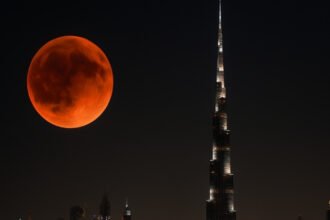
Iran launched around 400 ballistic missiles, over 1,800 drones and multiple cruise missiles targeting US bases in the UAE. Debris even reached areas near Burj Al Arab, Palm Jumeirah, and Dubai Airport.
The main reason is that UAE is a strong military ally of the US and hosts American forces. This made it a direct target.
The conflict also disrupted the Strait of Hormuz, causing what experts call one of the biggest oil supply disruptions in history. Saudi Arabia and Oman have alternative oil routes and are less directly involved, which helped them stay more stable.
Expert Opinions, Crisis or Temporary Shock?
Experts have different views.
Some believe this is a short-term shock affecting investor confidence, but not a long term threat to UAE’s economic plans.
Others say that once the conflict ends, Dubai and Abu Dhabi markets could recover strongly since there are no major structural issues. However, the longer the war continues, the harder recovery will become. Tourism, foreign investment and expat confidence may decline over time.
UAE’s Long Term Vision
Despite the crisis, UAE’s economic foundations are still strong for now.
In 2024, UAE stock markets crossed $1 trillion in value for the first time. Dubai also ranked 7th in the Global Financial Centres Index. The country has a 10 year plan to make Dubai one of the top 4 financial centers in the world by 2033.
Its diversified economy, including finance, technology, tourism, and logistics, is a strength. But this global integration also makes it more vulnerable during crises.
Conclusion
The UAE built its economy on openness and global connections, but now this openness has become a risk.
In the short term, there is clear damage, $120 billion lost, closed airports, empty hotels, and falling property prices.
In the long term, there is still strength, strong regulations, a diversified economy and a history of recovery.
If the conflict ends soon, markets are expected to recover quickly. But if the war continues, the damage could go beyond numbers and affect Dubai’s global reputation.
Now the world is watching Dubai, will it rise again, or struggle to recover this time?